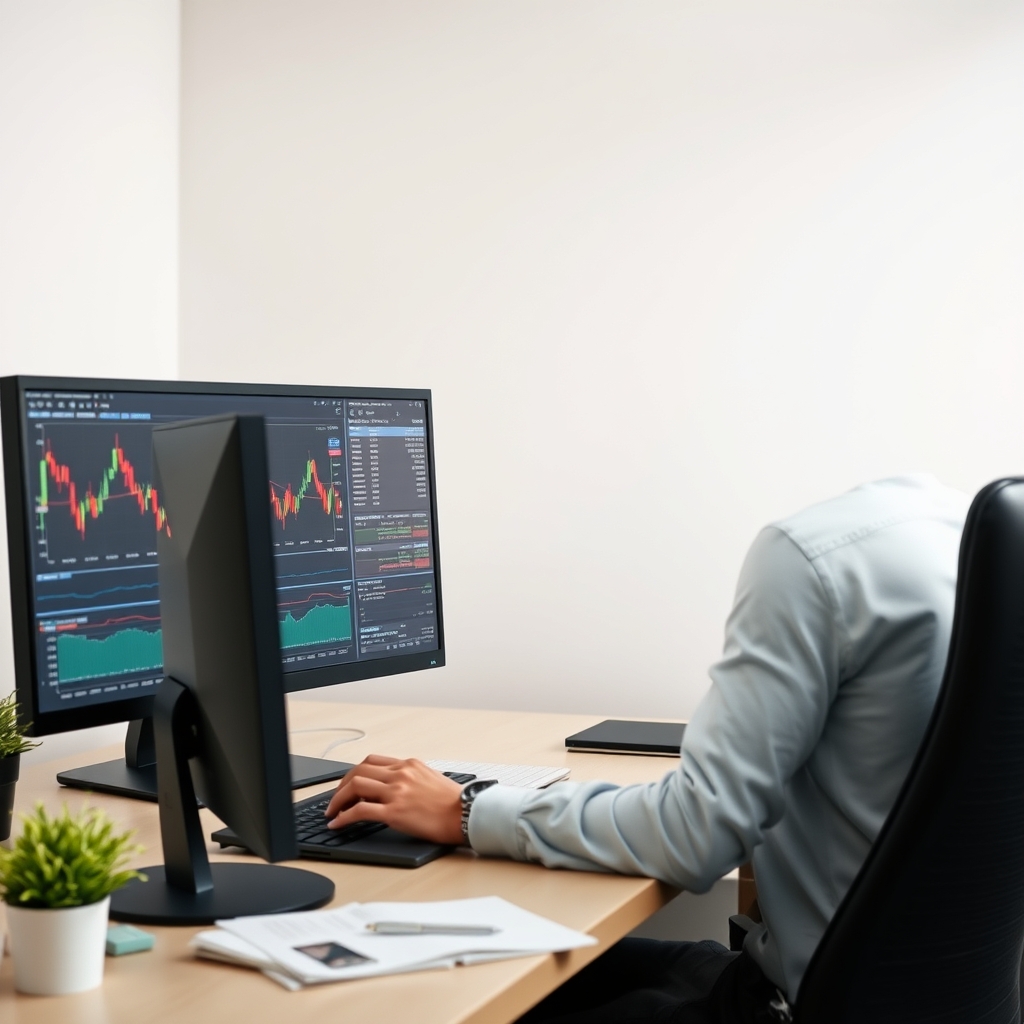
You can open a forex account with a small deposit, but a small account changes what is realistic. It limits how much risk you can take, how much you can earn, and how many mistakes you can afford. This guide covers how to set up a small account sensibly, how to size positions, and what goals make sense. Trading leveraged products carries a real risk of losing all the money you deposit. Only use money you can afford to lose, and consider speaking with a licensed financial professional if you are unsure.
The Honest Starting Point
A small balance does not make trading easier. Costs such as spreads and commissions take a larger share of a small account, and a few losing trades can erase a big part of it. Many people respond by using high leverage to chase bigger returns, and that is one of the most common ways small accounts fail.
Treat a small account as a low-cost classroom. The goal of the first months is to learn how you behave when money is at risk, not to grow the balance quickly.
Before You Deposit Anything
- Learn the mechanics. Make sure you understand currency pairs, pips, lots, spreads and orders. If you are new, start with Forex Trading for Beginners and the beginner roadmap.
- Practice on a demo. Compare options in Best Forex Demo Accounts Compared and trade a written plan for a while. Demo trading lacks the emotional pressure of real money, so it proves your process, not your temperament.
- Use free learning resources first. There is no need to buy expensive courses. See free courses, books and PDFs.
Micro Accounts and Small Lot Sizes
Many brokers offer account types with small minimum deposits and fractional lot sizes. Names and terms vary, and they change, so check the broker's official site for current minimums, contract sizes, spreads, commissions and regulation. Do not rely on a third-party summary for these details.
Typical lot terms are as follows:
- Standard lot: 100,000 units of the base currency.
- Mini lot: 10,000 units.
- Micro lot: 1,000 units.
Some brokers allow even smaller sizes. Your pip value depends on the pair and position size; see what a pip is worth. For a USD-quoted pair like EUR/USD, one pip on a micro lot is roughly 10 cents, but verify this on your platform.
What to Check When Choosing a Broker
| Factor | Why it matters for small accounts |
|---|---|
| Regulation | Affects fund protection and dispute options. Verify with the regulator directly. |
| Minimum lot size | Determines how precisely you can control risk. |
| Spreads and commissions | Costs weigh heavily on small balances. |
| Deposit and withdrawal terms | Check fees, methods and processing times. |
| Leverage limits | Vary by region and may be capped for retail clients. |
When you are ready, see how to open a forex account, including identity checks and country requirements.
Position Sizing: The Skill That Keeps You in the Game
Position sizing means deciding how many units to trade so that a losing trade costs a limited, planned amount. Many traders risk around 1% or less of their account per trade, though this is a convention, not a rule, and nothing makes it safe.
The Formula
Position size = amount at risk ÷ (stop-loss distance in pips × pip value per unit)
Here is an illustrative example with made-up numbers. Suppose the account is $500 and you risk 1%, which is $5. Your stop is 25 pips away. Using a pip value of about $0.10 per micro lot, each micro lot loses about $2.50 if the stop is hit. Two micro lots would risk about $5. If the math gives you a size smaller than your broker's minimum, the trade is too big for your account, so skip it or widen your plan.
For more on sizing, read what lot size a beginner should use.
Leverage Is Not a Target
Leverage lets you control a larger position than your deposit, and it magnifies losses as well as gains. Your risk comes from position size and stop placement, not from the maximum leverage on offer. Always place a stop-loss, and understand that in fast markets, price gaps and slippage can cause losses larger than planned.
 Recommended for youHow Forex Trading Works: Currency Pairs, Pips, Lots, Spreads and Orders Explained
Choosing What to Trade
- Stick to one or two liquid pairs, which usually have tighter spreads. See the best currency pair for beginners.
- Trade when your pair is most active. Market hours and sessions explain when liquidity tends to be higher.
- Avoid trading around major news until you understand how spreads can widen.
Setting Realistic Goals
Be wary of anyone who promises to turn a small deposit into a large sum. Returns are not predictable, and most retail traders lose money. Better early goals are:
- Follow your rules on every trade, whether it wins or loses.
- Keep a journal with entry, exit, reason, risk and outcome.
- Keep losses within your preset limit, such as a maximum weekly drawdown.
- Reach 50 to 100 logged trades before judging your approach.
Learning takes a long time for most people; see how long it takes to learn forex. Do not add money to chase losses, and never borrow to trade.
Common Small-Account Mistakes
- Oversizing trades to make the account grow faster.
- Trading too many pairs with no clear plan.
- Moving or removing stop-losses.
- Ignoring costs, including spreads, commissions and withdrawal fees.
- Choosing an unregulated broker because of a bonus offer.
A Simple Starting Plan
- Learn the basics and practice on a demo.
- Pick a regulated broker and confirm current terms on its official website.
- Deposit only money you can afford to lose.
- Risk a small fixed percentage per trade, with a stop on every position.
- Review your journal weekly and adjust slowly.
This guide is educational and not personal financial advice. If trading starts to affect your finances or wellbeing, stop and speak with a qualified professional.
Keep reading
 What to Learn First in Forex: A Step-by-Step Beginner RoadmapMost people who struggle early in forex don't fail because they picked the wrong indicator. They fa…
 Best Free Forex Courses, Books and PDFs for BeginnersFree forex education is plentiful, but quality varies widely. Some of it is solid and neutral. Some…
 Best Forex Demo Accounts Compared: Where to Practice Before Risking Real MoneyA demo account lets you place trades with virtual money in live market conditions. It is the safest…