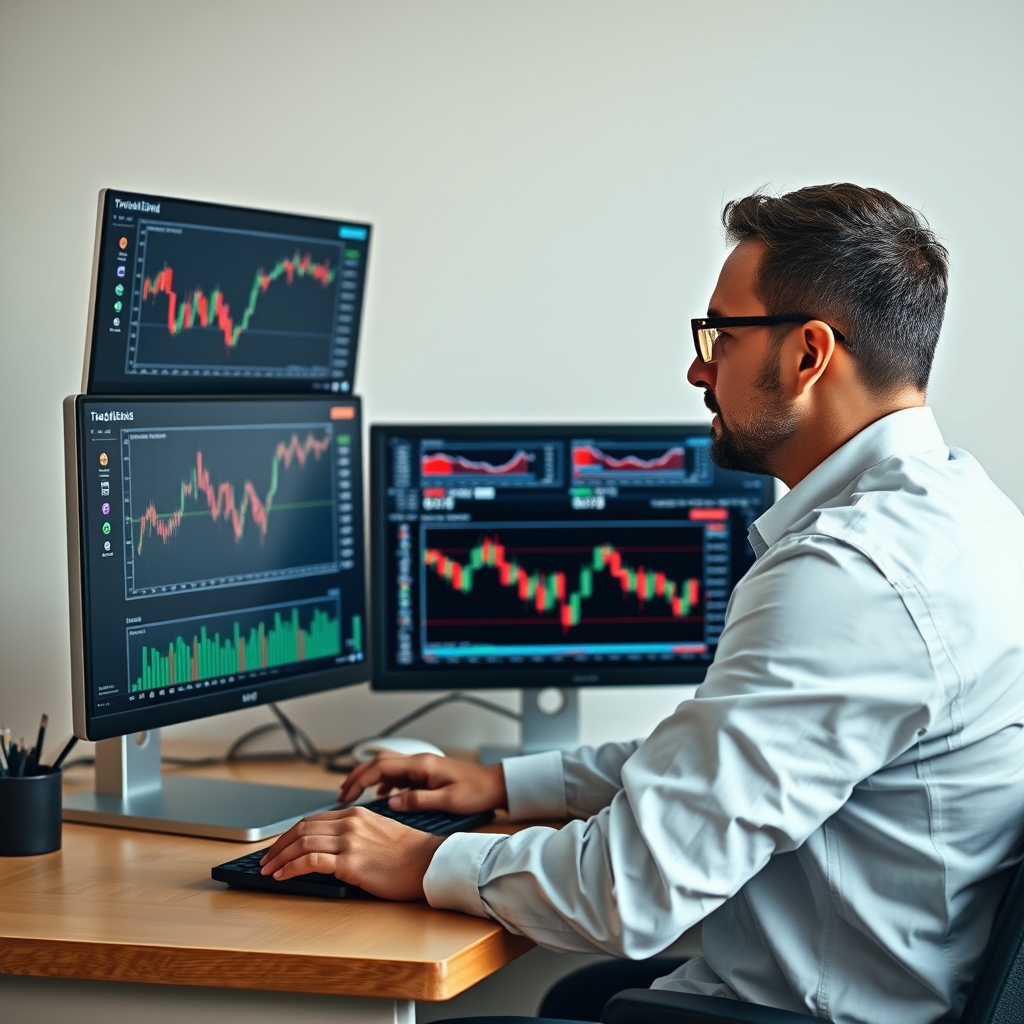
Forex trading means exchanging one currency for another, usually through a broker, with the aim of profiting from price changes. It is a real market with real risk. Leveraged products can lose money quickly, and many retail traders lose. This guide covers the mechanics so you can understand what you are clicking before you risk anything. It is educational, not financial advice. If you are unsure whether trading suits your situation, consider speaking with a licensed financial professional.
Currency Pairs: What You Are Actually Trading
Currencies are quoted in pairs, such as EUR/USD. The first is the base currency and the second is the quote currency. If EUR/USD is 1.1000, one euro costs 1.1000 US dollars.
- Buying (going long) means you expect the base currency to strengthen against the quote.
- Selling (going short) means you expect it to weaken.
Pairs are usually grouped as majors (involving the US dollar, like EUR/USD), minors (major currencies without the dollar) and exotics (a major paired with a smaller economy's currency). Exotics generally have wider costs and more erratic moves. For a deeper look at choosing one, see What is the best currency pair for beginners to trade?
Pips, Lots and Position Size
Pips
A pip is the standard unit for measuring price movement. For most pairs it is the fourth decimal place (0.0001); for pairs involving the Japanese yen it is usually the second (0.01). Many brokers also show fractional pips, called pipettes. A pip's money value depends on pair, position size and account currency. The details are in What is a pip in forex and how much is it worth?
Lots
A lot is the trade size. Conventionally:
- Standard lot: 100,000 units of the base currency
- Mini lot: 10,000 units
- Micro lot: 1,000 units
Contract sizes and minimums vary by broker, so confirm them on the official site. A beginner using too large a lot is one of the fastest routes to a blown account. See What lot size should a forex beginner use?
A practical sizing method
- Decide the most you will risk on one trade, often a small percentage of your account. Many traders choose 1% or less; this is a risk-management convention, not a guarantee of safety.
- Decide where your stop-loss goes, based on the chart rather than on what you can afford.
- Measure the distance in pips.
- Divide your risk amount by (stop distance in pips × value per pip for that lot size) to get position size.
If you are starting small, How to Start Forex Trading with Little Money goes deeper on micro accounts and realistic goals.
Spreads and Other Costs
The spread is the difference between the bid (where you can sell) and the ask (where you can buy). You start every trade slightly behind by that amount. Spreads can widen during news releases, thin liquidity or rollover.
- Commission: some account types charge it on top of a tighter spread.
- Swap (overnight financing): holding positions past the daily cut-off can cost or earn interest, depending on direction and rates.
- Slippage: your order may fill at a different price in fast markets.
Costs matter most for frequent, short-term trading. Timing also affects them; see Forex Market Hours and Trading Sessions.
 Recommended for youWhat to Learn First in Forex: A Step-by-Step Beginner Roadmap
Leverage and Margin
Leverage lets you control a larger position than your deposit. Margin is the amount set aside to hold that position open. Leverage magnifies gains and losses equally. High leverage is not a feature to chase; it mainly reduces your room for error. Maximum leverage depends on your broker and regulator, so check current limits directly. If your equity falls too far, you may face a margin call or automatic closure of positions.
Order Types
| Order | What it does | Tradeoff |
|---|---|---|
| Market | Executes immediately at the available price | Fast, but subject to slippage |
| Limit | Buys below or sells above the current price at your chosen level | Better price, but may never fill |
| Stop (entry) | Triggers a trade once price moves through a level | Useful for breakouts, but can fill worse than expected |
| Stop-loss | Closes a trade at a set loss level | Limits risk, but can still slip in fast markets |
| Take-profit | Closes a trade at a target | Locks in gains, but may exit before a bigger move |
Whether stop-losses are guaranteed varies by broker and account type, and guaranteed stops may carry extra cost. Confirm on the official site.
A Sensible Path From Reading to Trading
- Learn the basics first. Follow What to Learn First in Forex and the overview in Forex Trading for Beginners. Free material is listed in Best Free Forex Courses, Books and PDFs for Beginners.
- Practice on a demo. Compare options in Best Forex Demo Accounts Compared. Demo fills are often cleaner than live ones and carry no emotional pressure, so do not treat demo results as a promise.
- Choose a broker carefully. Check regulation, costs, deposit and withdrawal terms, and platform. Use our review and comparison pages as a starting point, then verify current details on the broker's official site.
- Open and verify an account. Requirements differ by country; see How to Open a Forex Trading Account.
- Go live small. Use money you can afford to lose, keep a trade journal and review it regularly.
Timelines vary widely. See How long does it take to learn forex trading? for a realistic view.
Honest Tradeoffs
- The market is open nearly around the clock on weekdays, but that does not mean you should trade around the clock.
- Low costs and high leverage are attractive, yet they can encourage overtrading.
- No strategy wins every time. Surviving losing streaks through small position sizes matters more than finding a perfect entry.
Treat forex as a skill that takes time to develop, and be prepared for the possibility that it is not for you. If trading starts to affect your finances or wellbeing, stop and consider speaking with a qualified professional.
Keep reading
 Best Free Forex Courses, Books and PDFs for BeginnersFree forex education is plentiful, but quality varies widely. Some of it is solid and neutral. Some…
 Best Forex Demo Accounts Compared: Where to Practice Before Risking Real MoneyA demo account lets you place trades with virtual money in live market conditions. It is the safest…
 How to Start Forex Trading with Little Money: Micro Accounts, Position Sizing and Realistic GoalsYou can open a forex account with a small deposit, but a small account changes what is realistic. I…